Posts

Top Trends in Eyewear Fashion for 2024

Image
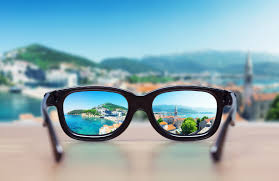
  Eyewear has evolved beyond mere functionality to become a defining element of personal style. With 2024 ushering in new designs, materials, and aesthetics, here’s a look at the top trends dominating the eyewear fashion scene this year. 1. Oversized Frames: Bold and Beautiful Oversized frames continue to reign supreme, offering a retro-inspired yet modern appeal. These statement pieces, often square or round in shape, provide ample coverage and a sense of boldness. From pastel hues to classic tortoise-shell patterns, oversized glasses are a must-have for those who love to make an impression. 2. Transparent and Translucent Frames Minimalism takes center stage with clear and translucent frames. Available in subtle tints like pink, blue, and beige, these frames strike the perfect balance between simplicity and sophistication. Their versatility makes them suitable for both professional and casual settings. 3. Sustainable Eyewear: Style Meets Responsibility As sustainability becomes a ...

From Lenses to Frames: A Guide to Finding Your Style

Image
 Finding the perfect pair of glasses goes beyond just correcting your vision. Your glasses are a significant style statement, one that reflects your personality, lifestyle, and taste. With so many lens options, frame shapes, and styles available today, finding the right match can seem overwhelming. Here’s a guide to help you navigate the world of lenses and frames, so you can find glasses that make you feel both confident and comfortable. 1. Understanding Your Lens Needs Single Vision, Bifocal, or Progressive Lenses : Your lens choice depends on your specific vision needs. Single vision lenses correct either nearsightedness or farsightedness, bifocal lenses address two different prescriptions, and progressive lenses provide a gradual change in strength, ideal for those who need multifocal lenses without visible lines. Lens Materials : Consider high-index lenses if you have a strong prescription, as they are thinner and lighter. Polycarbonate lenses are durable and impact-resistant...

Beyond the Visible: Exploring the Spectrum in Optical Science

Image
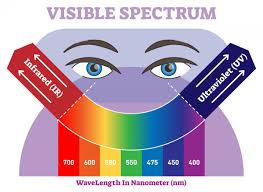
The science of optics has brought to light far more than what the human eye can see. While we’re used to perceiving only a tiny fraction of the electromagnetic spectrum—the visible light—we’re surrounded by a vast array of wavelengths that hold the keys to understanding everything from cellular structures to distant galaxies. This journey into the invisible parts of the spectrum is essential in optical science, and it has profoundly changed how we understand and interact with the world around us. Understanding the Electromagnetic Spectrum The electromagnetic spectrum is a range of wavelengths from the shortest (gamma rays) to the longest (radio waves). The visible light spectrum, which human eyes can detect, falls between approximately 400 to 700 nanometers in wavelength. Yet, the parts of the spectrum beyond visible light—infrared, ultraviolet, X-rays, and more—are just as crucial in many scientific applications. Each section of the spectrum has unique properties and potential uses. I...

What Are Progressive Lenses and How Do They Work?

Image
Progressive lenses are a type of multifocal lenses designed to correct vision at multiple distances—near, intermediate, and far—all in a single lens. Unlike bifocals or trifocals, progressive lenses have a smooth, seamless transition between different focal points, eliminating the visible lines seen in older multifocal glasses. This makes them a popular choice for people with presbyopia, a condition that typically affects people over 40, causing difficulty in seeing nearby objects. How Do Progressive Lenses Work? Progressive lenses work by gradually changing the lens power from top to bottom. The top portion of the lens is optimized for distance vision, the middle part is for intermediate distances (like computer screens), and the lower section is for close-up tasks (like reading). Here’s how the different parts of a progressive lens function: Upper portion : Provides clear vision for distant objects. Middle portion : Corrects intermediate vision, making tasks like looking at a compu...

What Aspect of Eye Care Do You Prioritize the Most When Visiting an Optician?

Image
  When it comes to taking care of your eyes, everyone has different priorities. Some people focus on getting the right prescription, while others care more about finding stylish frames or receiving top-notch customer service. Regardless of what drives you, visiting an optician is an important step in maintaining good eye health. But what matters most to you when you visit an optical practice? Let’s explore some of the key factors people consider when choosing an optician. 1. Accurate Prescription and Vision Correction For many, the most important part of visiting an optician is ensuring they get the correct prescription for their glasses or contact lenses. Whether you’re near-sighted, far-sighted, or have astigmatism, clear vision is essential for daily life. An accurate prescription allows you to see clearly without straining your eyes, reducing the risk of headaches and discomfort. Opticians play a vital role in providing precise measurements and adjustments to your eyewear, ensu...

Why Regular Visits to Your Optician Are Essential for Eye Health

Image
  When it comes to maintaining good health, people often prioritize physical fitness, nutrition, and general wellness. However, eye health is just as important but often overlooked. Regular visits to your optician are essential for protecting your vision and ensuring that any potential issues are detected early. Here’s why making routine appointments with your optician should be a priority. 1. Early Detection of Eye Conditions Many serious eye conditions develop gradually, without noticeable symptoms in the early stages. Diseases like glaucoma, cataracts, and age-related macular degeneration can progress quietly, leading to significant vision loss before you realize something is wrong. Opticians, along with optometrists, can identify early warning signs during routine eye exams. Early detection allows for timely treatment and can prevent irreversible damage to your eyesight. For example, glaucoma is known as the "silent thief of sight" because it often has no symptoms until v...

How Opticians Help Detect and Prevent Eye Diseases

Image
  Opticians play a vital role in maintaining our eye health, often acting as the first line of defense in detecting and preventing various eye diseases. While they are primarily known for helping us select the right lenses and frames, their expertise goes far beyond just vision correction. They work closely with optometrists and ophthalmologists to ensure that your eyes stay healthy and your vision remains clear. Here's how opticians contribute to detecting and preventing eye diseases. 1. Comprehensive Eye Exams Although opticians themselves don’t conduct comprehensive eye exams, they are integral in facilitating them. These exams, performed by optometrists or ophthalmologists, are crucial in detecting early signs of eye diseases like glaucoma, cataracts, macular degeneration, and diabetic retinopathy. Opticians ensure that your prescription lenses are updated and work effectively, which can prevent eye strain and discomfort that may exacerbate underlying conditions. 2. Identifying...